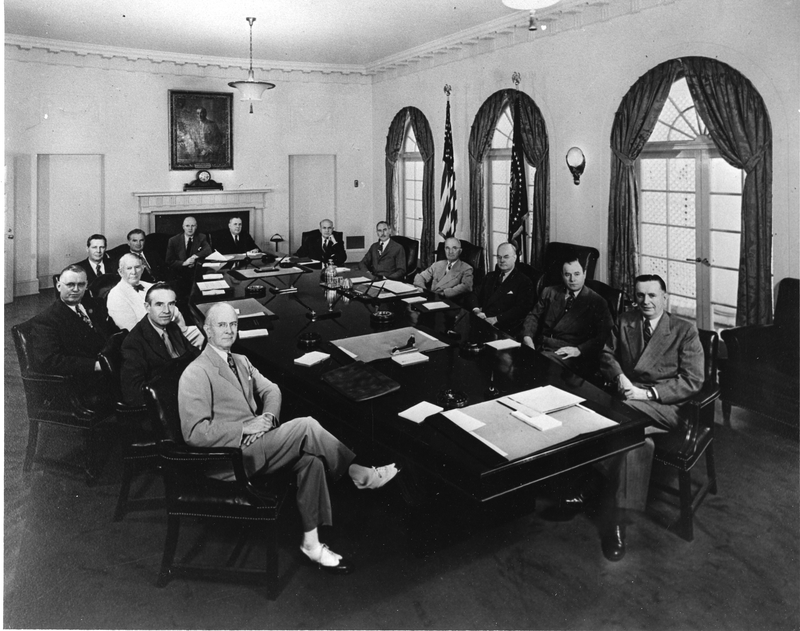
The Marshall Plan is often considered the epitome of noble and strategic foreign intervention by those who cite it as evidence of a successful foreign aid program. Hilary Clinton invoked it during the Arab Spring, seeking to offer a proven solution to a humanitarian problem, and George Soros cited it in the context of the Russo-Ukrainian War. It has widely been used as rhetoric to support modern foreign investment programs. Yet no post-Cold War policy resembles the Marshall Plan in scale, economic success, or long-term impact on geopolitical relations. As of 2023, the U.S. government spent $71.9 billion on foreign aid, significantly more than the Economic Recovery Act (ERP)'s annual spending when adjusted for inflation. However, U.S. funding to Ukraine, Afghanistan, or Israel, while significant, does not constitute a major threshold in international relations as the Marshall Plan did. The Marshall Plan resulted in the building of security alliances with Western European countries, the groundwork for NATO and the EU, economic rehabilitation of a ruined continent, and the imposition of capitalist and industrialist ideals on the Western sphere. It was a result of sui generis conditions, which allowed for a policy that was considered a "legislation against all odds. By contemporary standards of cross-party cooperation and public support, it was a remarkable triumph." Made possible by favorable industrialized economies and bureaucratic governments in Western Europe, tensions with the Soviet Union that incentivized urgency, and shifting domestic policy away from isolationism and towards interventionism, the Marshall Plan was a specific policy for a specific historical circumstance.
I. The Industrial Foundation
When the Allied occupation of Germany commenced in 1945, Germany was already industrialized, but its factories were dangerously underproducing. The ultimate question was how to rapidly rebuild its economy to prewar levels without risking remilitarization, and this was done by stimulating existing infrastructure through imports, surplus production, and trade. The industries of Germany were devastated by WWII, leading to an all-time high level of inflation and unemployment, as infrastructure was rendered useless by bombings and Nazification.
"The town and city industries are not producing adequate goods to exchange with the food-producing farmer. Raw materials and fuel are in short supply. Machinery is lacking or worn out." — George Marshall, Harvard Address, June 1947
Crucially, Germany was an industrialized country, meaning economic recovery was simpler — it didn't require changing Germany's social structure, as there was already a strong working class. Instead, the Marshall Plan provided aid to buy food, fuel, and machinery, to rebuild existing factories, and it implemented free trade policies that would nurture the recovering economy. The context of Europe as an industrialized society helped enable the Marshall Plan by providing multiple economic avenues to increase production. Clay advocated integrating the Ruhr with other industrial regions of Germany to encourage trade within a unified economy. Clayton argued that imports would bolster the economy and provide raw resources for factories and infrastructure projects, which he defended against Soviet demands for reparations. Preexisting industrial centers supported these strategies, which aimed to create an economy based on free trade eventually. The State Department outlined the goals of the ERP: "the progressive reduction and eventual elimination of barriers to trade within the area" and the "reactivation of the most efficient existing productive facilities."
II. The Role of Bureaucracy
Additionally, partial bureaucracies in the West were essential for coordinating ERP funds, notably the ECA and the OEEC, both established as part of the Marshall Plan and functioning as intergovernmental organizations to rebuild Europe's economies. American ECA planners didn't just use the organization to disperse funds; they cajoled European governments into adopting the economic policies they wanted. The efficiency of the bureaucracy enabled the Marshall Plan to be more than just a process of shipping in raw resources; American statesmen achieved policy goals that led to greater economic success.
III. Bipolarity
The geopolitical landscape of the late 1940s was uniquely bipolar, with the U.S. and the Soviet Union as two competing superpowers. This context did not just turn the Marshall Plan into a moral quest to contain communism; it also created a sense of urgent competition that helped it become a bipartisan law and pass through Congress. The Cominform speech of September 1947 revealed to the world Stalin's perception of the Marshall Plan as part of the "imperialist camp." It called to action that:
"The communists must be the leaders in enlisting all anti-fascist and freedom-loving elements in the struggle against the new American expansionist plans for the enslavement of Europe." — Andrei Zhdanov, Cominform Founding Speech, September 1947
The Soviet Union actively supported communist movements across Europe and undermined the conditionality clause of the Marshall Plan by bringing nonaligned countries under its sphere of influence. Czechoslovakia emerged from the Potsdam Conference nonaligned. Still, the Soviets infiltrated the police and threatened Czech cabinet officials, who decided keeping the Red Army out was worth more than U.S. aid. When the Czechs rejected the Marshall Plan under Stalin's orders, the State Department wrote them off, even though 80% of Czechs wanted democratic governance.
"What has happened in Czechoslovakia and Finland makes it obvious that time is of the essence." — Senator Arthur Vandenberg
The result was that getting aid to Europe and securing ECA influence over governments that fit the conditionality clause of the Marshall Plan became domestic priorities.
IV. The American Responsibility
A byproduct of the early Cold War and post-WWII destruction was the U.S. rising as the single dominant nation in the West. In Truman's view, with the British Empire weakening and Turkey and Greece becoming the U.S.'s responsibility, it became America's job to fend off the spread of Communism in Europe.
"Turkey has sought financial assistance from Great Britain and the United States […] the United States must supply it. We are the only country able to provide that help." — Harry S. Truman, Address to Congress, March 1947
This rhetoric spawned a new public sense of American responsibility, that the U.S. had a duty to Europe that must be fulfilled with the Marshall Plan. America was willing to cajole its weaker allies into adopting its policies and to clash with the Soviets on every economic issue. "When it came to Germany, the State Department treated the French as a mere benign tumor and the Soviets, increasingly, a malignant one."
V. Overcoming Isolationism
The final obstacle to passing the ERP in Congress was the political one. The U.S. had long grappled with isolationism throughout the 19th century and the start of WWII, and needed to overcome this ideology to pass the $13 billion act. The conditions of the Cold War and the initial promise that the Marshall Plan would help develop a financially independent Europe incentivized many Republicans to support the ERP. Still, the most significant factor was Senator Arthur Vandenberg, who served as a liaison between interventionist Democrats and isolationist Republicans. General Marshall reflected that "but for [Vandenberg's] leadership and coordination in the Senate, the plan would not have succeeded." Vandenberg, a former isolationist himself, argued that if the U.S. did not have the courage to offer European nations aid and security, then the Soviet Union would swiftly fill that gap. Just like how the ECA laid the groundwork for the EU, the U.S. shift from widespread isolationism to national enthusiasm for supporting European allies with vast amounts of aid planted the seeds for all future U.S. foreign aid programs. If Marshall, Kennan, and Clayton wanted to sell the Marshall Plan to the American public, they needed more than just anti-communist fear mongering. They had to prove to Americans why helping Europe was good and that the notion of Western Civilization, based on democratic and liberal capitalist ideals, was worth defending.
Conclusion
The Marshall Plan was the product of historical conditions that enabled it to contribute to Europe's economic recovery successfully and to lay the foundations for NATO, the EU, and the concept of the "West." Germany, France, and Britain's preexisting industrial base gave American planners a foundation for rebuilding rather than having to construct from scratch. It was the potential of European industry and its functioning bureaucracies that made the ERP plausible, as free trade reforms and imports became viable methods of recovery. The threat of Soviet communist expansion ended decades of American isolationism — the leadership of key players, like Vandenberg, accelerated its passage through Congress. The emergence of the U.S. as the leader of the free world further incentivized the Marshall Plan, giving American statesmen both the leverage and the responsibility to reshape European economies in line with their vision. The U.S. now had soft power; it used economic aid and diplomatic persuasion to contain the spread of Communism, a powerful form of interventionism that was built only for that geopolitical era. The idea of foreign investment as a way of shaping the global order emerged from the Marshall Plan and persisted into the 21st century. While modern foreign aid programs reflect this sentiment, they do not match the scale, impact, and divisiveness of the Marshall Plan because the conditions that allowed for the ERP are unrepeatable. The Marshall Plan was a policy shaped by the unique conditions of its time, and it is unlikely that such a momentous foreign aid package will be enacted again.
Bibliography
- Desilver, Drew. "What the Data Says about U.S. Foreign Aid." Pew Research Center. February 6, 2025. https://www.pewresearch.org/short-reads/2025/02/06/what-the-data-says-about-us-foreign-aid/
- Marshall, George. "Marshall Plan (1948)." National Archives. June 5, 1947. https://www.archives.gov/milestone-documents/marshall-plan
- Steil, Benn. The Marshall Plan: Dawn of the Cold War. Simon & Schuster, 2018.
- Truman, Harry S. "Truman Doctrine (1947)." National Archives. March 12, 1947. https://www.archives.gov/milestone-documents/truman-doctrine
- Zhdanov, Andrei. "Speech by Andrei Zhdanov (Member of the Soviet Politburo) at the Founding of the Cominform (a Communist International Organization) in September 1947." The History of Russia and the Soviet Union. UNC Greensboro, September 1947. https://home.uncg.edu/~jwjones/russia/378readings/1947speeches.html